
Alcohol Addiction Treatment in Karachi
Alcohol dependency is one of the most common forms of addiction seen in Karachi, and one of the most difficult for families to address without professional support. At PRC Rehab, we provide structured alcohol addiction treatment in Karachi for individuals whose drinking has begun to affect their health, relationships, work, or emotional wellbeing in ways they have not been able to address on their own.
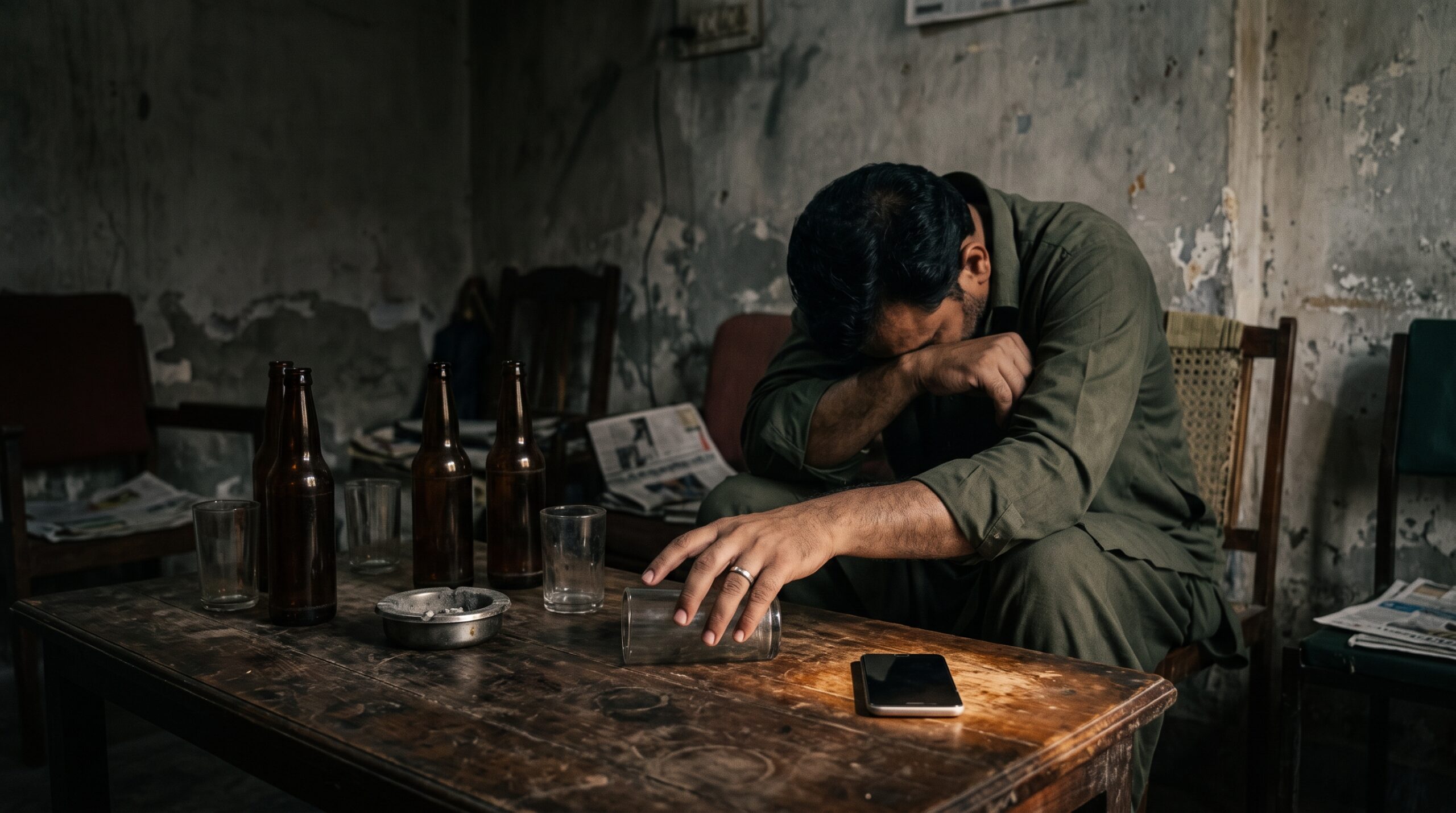
Alcohol addiction rarely looks the same from one person to the next. For some, it develops gradually over years. For others, it accelerates during periods of stress, loss, or emotional difficulty. In both cases, the point at which drinking crosses from habit to dependency is often invisible until the consequences become impossible to ignore.
PRC Rehab’s approach to alcohol addiction treatment is built around a thorough understanding of each individual’s situation, not a one-size-fits-all program. Our facilities in Clifton and Malir serve families across Karachi who are looking for a confidential, structured, and clinically responsible path forward.
When Alcohol Use Becomes a Problem
Alcohol use exists on a spectrum. Social drinking, occasional excess, and habitual drinking are all distinct patterns, but they can progress into dependency without the individual or their family recognizing the shift. The defining characteristic of alcohol dependency is not how much a person drinks, but what happens when they try to stop or cut down.
When alcohol use has become a dependency, it often persists despite clear and ongoing consequences. These may include:
Family conflict
Caused by drinking behavior, broken promises, or emotional unavailability.
Health problems
Liver strain, sleep disruption, digestive issues, and physical deterioration.
Work or study difficulties
Poor performance, absences, or loss of employment.
Financial strain
Spending on alcohol at the expense of household needs.
Emotional instability
Depression, anxiety, irritability, or aggression worsened by or linked to drinking.
Isolation
Withdrawal from friends, family, or responsibilities as drinking takes priority.
The presence of one or more of these consequences does not automatically mean someone is ready to seek help. Alcohol dependency often involves denial, minimization, or repeated attempts to manage drinking independently before professional support is considered. This is a recognized part of the condition, not a character flaw.
If a loved one’s drinking is affecting the household and previous attempts to address it have not worked, professional guidance can help clarify what level of support is appropriate.
Signs Someone May Need Alcohol Addiction Treatment
Families are often the first to notice the warning signs of alcohol dependency, even when they struggle to name what they are seeing. The following signs may indicate that a loved one’s drinking has moved beyond their ability to manage independently and that professional alcohol addiction treatment may be appropriate.
| Warning Sign | What It May Look Like |
|---|---|
| Drinking more often or in larger amounts | Consuming alcohol more frequently than before, or needing more to feel the same effect |
| Failed attempts to stop or cut down | Repeated promises to drink less followed by a return to previous patterns |
| Morning drinking | Drinking early in the day or before social or work obligations |
| Hiding alcohol use | Concealing bottles, minimizing how much has been consumed, or drinking secretly |
| Irritability, anxiety, or shaking without alcohol | Physical or emotional discomfort when alcohol is not available |
| Drinking despite family conflict | Continuing to drink even when it is clearly damaging household relationships |
| Poor work, study, or home functioning | Declining performance, missed commitments, or neglected responsibilities |
| Memory blackouts | Periods of time that cannot be recalled after drinking |
| Mixing alcohol with medication or drugs | Combining alcohol with prescription medicines or other substances in ways that increase risk |
| Relapse after trying to quit | Returning to drinking after periods of abstinence, sometimes repeatedly |
Alcohol Withdrawal and Detox Support
One of the most important things families should understand about alcohol addiction treatment is that stopping alcohol abruptly after heavy or long-term use can be physically uncomfortable, and in some cases clinically significant. Alcohol withdrawal is not simply a matter of willpower. It is a physiological process that the body undergoes when it has become dependent on alcohol, and that process can produce a range of symptoms.
What Alcohol Withdrawal May Involve
- Anxiety and restlessness
- Shaking or tremors, particularly in the hands
- Sweating and elevated heart rate
- Nausea or vomiting
- Sleep disturbance and vivid dreams
- Irritability and emotional volatility
- Strong cravings for alcohol
- Difficulty concentrating or mild confusion
In more serious cases of long-term heavy alcohol use, withdrawal can involve more significant symptoms including confusion, disorientation, and in rare cases seizure risk. This is why alcohol withdrawal should not be managed alone or without appropriate clinical awareness.
Clinical Note
The severity of alcohol withdrawal varies significantly depending on the duration and quantity of alcohol use, the individual's overall health, and whether other substances are involved. A clinical assessment before any reduction or cessation is strongly recommended.
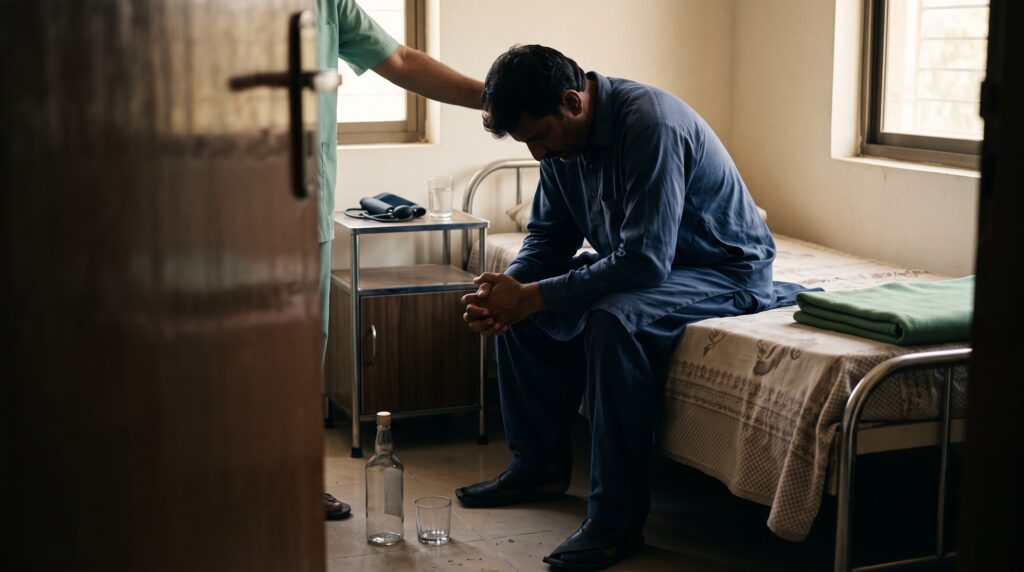
PRC Rehab’s detox program in Karachi provides supervised withdrawal support for individuals who require structured care during the detox process. Detox is treated not as a standalone intervention but as the beginning of a broader alcohol addiction treatment plan that addresses the emotional, behavioral, and psychological dimensions of recovery alongside the physical.
How PRC Rehab Supports Alcohol Addiction Recovery
PRC Rehab’s approach to alcohol addiction treatment begins with understanding each individual’s situation before recommending any course of action. Because alcohol dependency presents differently in every person, a tailored assessment is the foundation of effective treatment planning.
Confidential initial assessment
To understand the nature and history of alcohol use and its impact on the individual's health, functioning, and relationships.
Drinking history review
To identify patterns, triggers, and the circumstances in which alcohol use escalated.
Withdrawal and relapse risk identification
So that the physical and emotional risks of stopping or reducing alcohol use can be managed appropriately.
Supervised support where appropriate
To ensure the detox and early recovery period is managed safely.
Individual counseling
To address the personal, emotional, and behavioral dimensions of alcohol dependency, including the triggers and coping patterns that have sustained it.
Psychiatric and mental health evaluation
Where emotional or behavioral symptoms suggest a co-occurring condition that may be contributing to alcohol use.
Family guidance
To help households understand alcohol dependency and how to support recovery in a constructive and informed way.
Inpatient rehabilitation options
For individuals who require a structured residential environment to achieve and sustain early sobriety.
Relapse prevention planning
Tailored to each individual's specific triggers, history, and risk factors.
Aftercare guidance
To provide continued structure and support beyond the formal treatment period.
This process reflects the reality that alcohol addiction treatment is not a single event. It is a structured journey that requires clinical support at every stage, from the first assessment through to long-term recovery planning.
For individuals who have been through treatment before and relapsed, PRC Rehab’s approach includes a careful review of what did not work previously and why, so that the next treatment plan is built on a more informed and realistic foundation.
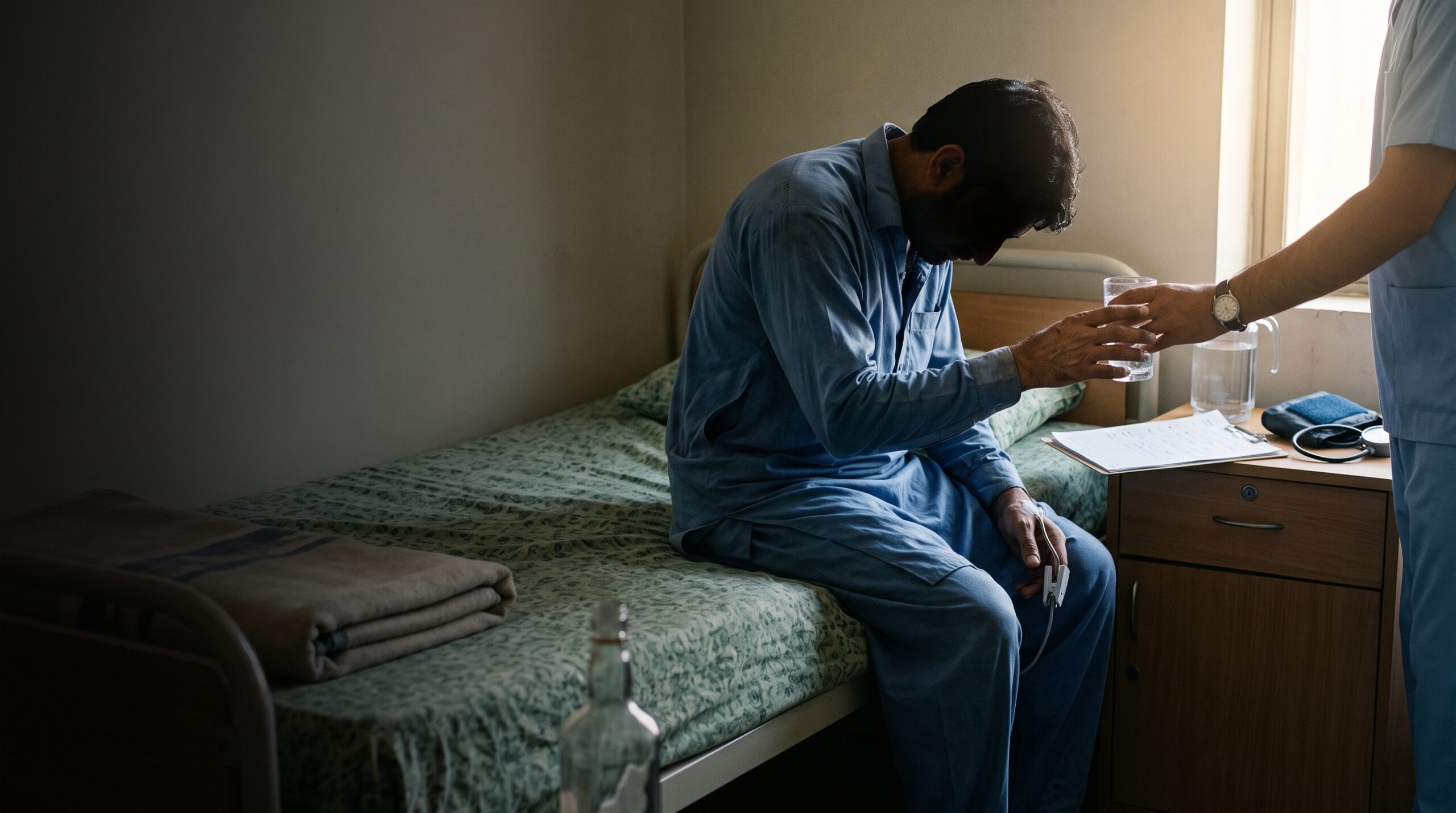
Inpatient treatment is particularly appropriate for individuals who have relapsed after previous outpatient attempts, those with a long history of heavy alcohol use, and those whose home environment does not provide adequate support for early recovery.
PRC Rehab’s inpatient facilities in Clifton and Malir provide this level of structured residential care for families across Karachi. The rehab admission process page explains what to expect at each stage, from initial inquiry through to admission and treatment planning.
Inpatient Alcohol Addiction Treatment in Karachi
For many individuals with alcohol dependency, outpatient support is not sufficient to achieve stable early recovery. When drinking is severe, when the home environment is not conducive to sobriety, or when previous attempts at recovery have not held, inpatient alcohol addiction treatment provides the structure and separation from triggers that many people need to make meaningful progress.
Inpatient rehabilitation at PRC Rehab offers a residential treatment environment where individuals can focus entirely on recovery, away from the circumstances, relationships, and environments that have sustained their drinking. The structured routine of inpatient care provides:
- Physical stabilization during and after the withdrawal period, with clinical oversight where required.
- Daily therapeutic structure through counseling, group support, and behavioral therapy sessions.
- Removal from environmental triggers that make sustained sobriety difficult in an outpatient setting.
- Consistent monitoring of both physical health and emotional wellbeing throughout the early recovery period.
- A foundation for relapse prevention built during the residential period and carried forward into aftercare.
Mental Health and Alcohol Addiction
Alcohol dependency and mental health difficulties frequently occur together, and each can worsen the other in ways that make recovery more complex without integrated support. Understanding this connection is an important part of effective alcohol addiction treatment.
Alcohol as coping
For some individuals, alcohol use begins as a way of managing emotional pain that has not been addressed through other means. Depression, anxiety, trauma, chronic stress, anger difficulties, and sleep problems can all create a vulnerability to alcohol dependency when drinking is used as a coping mechanism.
Alcohol as cause
For others, prolonged heavy drinking gradually damages mood regulation, sleep architecture, cognitive clarity, and emotional stability. Symptoms of depression, anxiety, irritability, and paranoia can emerge or worsen as a direct result of long-term alcohol use, even in individuals who did not have pre-existing mental health difficulties.
Both together
The most clinically significant challenge arises when both are present simultaneously. In these situations, treating alcohol dependency alone while leaving emotional or psychiatric difficulties unaddressed often leads to incomplete recovery and increased relapse risk.
When a clinical assessment suggests that mental health concerns are contributing to or co-occurring with alcohol dependency, PRC Rehab’s dual diagnosis treatment approach addresses both conditions within the same treatment plan. For individuals whose mental health needs require a broader level of support, our mental health rehabilitation center in Karachi provides structured psychiatric and emotional care alongside addiction treatment.
Family Support During Alcohol Recovery
Alcohol dependency does not affect only the individual who drinks. Families living alongside alcohol addiction often carry significant emotional strain, confusion, and exhaustion. They may have tried to manage the situation themselves for months or years before seeking outside help. They may feel responsible, angry, or uncertain about what role they should play in their loved one’s recovery.
At PRC Rehab, family involvement is treated as a meaningful part of the alcohol addiction treatment process, not an afterthought. Our family support counseling services are designed to:
Help family members understand alcohol dependency as a condition that requires structured clinical support, not simply willpower or moral resolve.
Rebuild communication and trust that may have been damaged by the impact of drinking on household relationships.
Equip families with practical tools for supporting recovery without inadvertently enabling continued alcohol use.
Address the emotional toll that living with alcohol dependency has had on the household.
Prepare families for the challenges that can arise during and after treatment, particularly around relapse risk and emotional triggers.
Family sessions are conducted with confidentiality and sensitivity to the specific dynamics of each household. Every family that contacts PRC Rehab is approached with the same discretion and respect that we extend to the individuals in our care.
Supporting a loved one through alcohol addiction recovery is not about monitoring or controlling their behavior. It is about creating a household environment that makes sustained recovery more possible, and about ensuring that family members themselves have the support they need throughout the process.
Relapse Prevention After Alcohol Treatment
Relapse is a recognized risk in alcohol addiction recovery, and planning for it honestly is a clinical responsibility. For many individuals, the period immediately after formal treatment ends is the most vulnerable. The structure and supervision of residential care is no longer present, and the individual returns to the environments, relationships, and emotional patterns that previously sustained their drinking.
Effective relapse prevention is not a single conversation at the end of treatment. At PRC Rehab, it is built into the alcohol addiction treatment process from the beginning, and it continues through outpatient and aftercare programs that provide continued structure beyond the formal residential period.
What Relapse Prevention Planning Addresses
Each individual’s relapse prevention program is tailored to their specific situation and may include:
- Identified triggers specific to their drinking history, including emotional states, social situations, and environmental cues.
- Coping strategies for managing cravings, stress, emotional escalation, and the specific circumstances that have previously led to drinking.
- Warning signs to recognize in themselves and that trusted family members can also watch for.
- A clear plan of action if relapse occurs, so that it can be responded to quickly and without shame rather than becoming a prolonged return to dependency.
- Continued professional contact through aftercare and follow-up support.
For individuals who have relapsed after previous treatment attempts, this planning is especially detailed. Understanding what did not work before and why is essential to building a more effective and realistic recovery plan the second time around.
Recovery from alcohol dependency is possible with the right support, honest planning, and a treatment experience that prepares individuals for the full complexity of the road ahead.
Confidential Alcohol Addiction Help in Karachi
Reaching out about alcohol addiction is not easy. Many families wait months or years before contacting a treatment center, uncertain whether what they are seeing qualifies as a serious problem, worried about stigma, or unsure whether their loved one will accept help. These concerns are understandable, and they are something PRC Rehab hears from almost every family that contacts us.
Confidentiality is a core part of how we operate. Every inquiry, assessment, and treatment interaction is handled with discretion. Information shared with our team is not disclosed without consent, and families can ask questions and explore options without any obligation to proceed.
If you are looking for alcohol addiction treatment in Karachi and are not sure where to begin, a confidential addiction assessment is a practical first step. It gives our clinical team the information they need to advise you, and it gives your family a clearer picture of what support may be most appropriate.
For families who would like to understand what the process involves before reaching out, the rehab admission process page explains what to expect at each stage. In situations where the presentation is urgent or the individual is in a crisis, emergency rehab admission options are also available.
PRC Rehab’s facilities in Clifton and Malir serve families across Karachi. For individuals whose alcohol use is connected to drug use, our drug rehabilitation center in Karachi provides integrated polysubstance treatment support.
Ready to take the next step?
Contact PRC Rehab today for confidential alcohol addiction treatment guidance in Karachi. Our team is available to answer your questions, explain what the assessment involves, and help you understand the right level of care for your loved one. You do not have to navigate this alone.
Frequently Asked Questions
Still unsure whether treatment is the right step? Speak to our clinical team in confidence.
What is alcohol addiction treatment?
Alcohol addiction treatment is a structured clinical process that supports individuals in safely reducing or stopping alcohol use and addressing the physical, emotional, and behavioral factors that have sustained their dependency. It may include detox and withdrawal support, individual counseling, group therapy, psychiatric evaluation, family guidance, inpatient rehabilitation, and relapse prevention planning, depending on the individual’s needs and the severity of their dependency.
When should someone seek alcohol addiction treatment?
Someone should consider seeking professional alcohol addiction treatment when drinking is continuing despite clear negative consequences, when previous attempts to stop or reduce have not succeeded, when physical withdrawal symptoms appear when alcohol is not available, or when alcohol use is affecting health, work, relationships, or safety. A confidential assessment can help clarify whether professional treatment is appropriate and what level of care may be needed.
Does PRC Rehab provide alcohol addiction treatment in Karachi?
Yes. PRC Rehab provides confidential alcohol addiction treatment in Karachi, with facilities in Clifton and Malir. Our treatment approach is tailored to each individual’s situation and may include detox support, inpatient rehabilitation, counseling, family guidance, and relapse prevention planning.
Is alcohol withdrawal dangerous?
Alcohol withdrawal can range from uncomfortable to clinically significant, depending on the duration and intensity of alcohol use and the individual’s overall health. Common symptoms include anxiety, shaking, sweating, nausea, and sleep disturbance. In cases of long-term heavy alcohol use, withdrawal can involve more serious symptoms. This is why alcohol withdrawal should be managed with clinical awareness rather than attempted alone. PRC Rehab’s detox program in Karachi provides supervised support for individuals who require structured withdrawal care.
Does alcohol addiction treatment include detox?
Where physical dependency is present, detox support is available and is integrated into the broader alcohol addiction treatment plan. At PRC Rehab, detox is not treated as a standalone intervention. It is the beginning of a structured treatment process that also addresses the emotional, behavioral, and psychological dimensions of alcohol dependency alongside the physical withdrawal process.
Can families be involved in alcohol addiction recovery?
Yes, and family involvement is actively encouraged. Alcohol dependency affects the entire household, and families benefit from guidance that helps them understand the condition, rebuild communication, and develop practical tools for supporting recovery. PRC Rehab’s family support counseling services are available throughout the treatment process.
Is alcohol addiction treatment confidential?
Yes. Confidentiality is a core part of how PRC Rehab operates. Every inquiry, assessment, and treatment interaction is handled with discretion. Information shared with our team is not disclosed without consent. Families and individuals can contact us with questions, explore options, and arrange a confidential addiction assessment without any obligation to proceed.
11 — Admissions Inquiry
Request a Confidential Call Back
Complete the form and our admissions team will contact you to discuss your needs and guide you through the next steps. All information is treated confidentially.
CALL US TODAY
Clifton Address
F-3/1, G-20 Forum St, Block 9 Clifton, Karachi, 75600, Pakistan
Malir Address
H.no 248, Gelanabad, Malir Khokharapar No. 2, Karachi
Hub Balochistan Address
Near Jaam Ghulam Qadir civil Hospital Agri Auto Road